

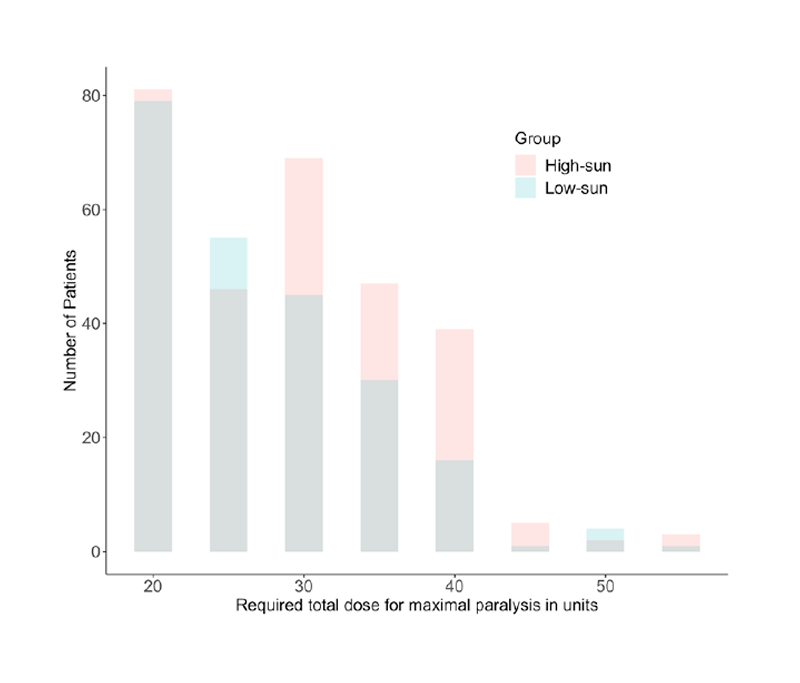
The Effect of Climate on the Dose Requirements of Botulinum Toxin A in Cosmetic Interventions
Kim L. Borsky, MBBS, MD1
Jeremy N. Rodrigues, MBA,
PhD, FRCS1,2
Raina Rodrigues, MBA, PhD,
FRCS3,4
Aylesbury, Coventry, Stevenage,
and London, United Kingdom; and
Birkirkara, Malta
Background: Botulinum toxin A to the glabella is a popular cosmetic intervention.
Functional musculature differences may arise from chronic behavioral
adjustment to high sun exposure levels, requiring greater doses. This could
affect clinical practice globally. This study investigated the effect of climate on
real-world doses.
Methods: The authors conducted a comparative cohort study using data from
a registry from a single provider practicing across two centers: the United
Kingdom and Malta. They classified one center as low sun exposure (United
Kingdom winter month treatment) and the other as high sun exposure (Malta
summer months). Patients were followed up once every 3 weeks and received
top-up doses until full clinical paralysis was achieved.
To standardize the comparison, the study included only women aged 35 to 60 years undergoing glabellar botulinum toxin treatment by experienced clinicians following standard
procedures from 2012 to 2019. Smokers, those not seeking maximal paralysis,
those documented as not compliant with posttreatment advice, those with colds
or fevers, and those with broken cold supply chains were excluded. Univariable
and multivariable analyses were undertaken.